If you can't do it well, do it badly
If you can't do it well, do it badly.
Three push-ups beat the gym session you keep rescheduling. A messy paragraph beats the brilliant chapter still in your head. Toast for dinner beats the proper meal you were too tired to cook. Each of those happened. The polished version you keep meaning to get to did not.
The pull of doing it properly
Waiting until you can do it right feels responsible. If you've only got twenty minutes and the workout really wants an hour, skipping it can seem almost sensible. Why bother doing half a job? A flimsy effort can feel like it barely registers, or like it quietly lowers the standard you're holding yourself to.
That instinct makes sense. Most of us were taught that anything worth doing is worth doing properly, and there's genuine satisfaction in doing a thing the full, careful way.
When "right or not at all" becomes "not at all"
The trouble is where that standard lands you on an ordinary day. "Do it right or don't bother" sounds rigorous, but in practice the answer it produces, most days, is "don't bother."
The hour-long workout that needs the right mood and a clear evening happens twice this month. The scrappy twenty-minute one happens forty times. Over a year, the person who kept showing up badly is somewhere the person waiting to show up well never reached. A run skipped because it wouldn't have been a good run is still a run skipped. A page left blank because you weren't in the mood is still blank.
Consistency at low effort outruns intensity you can't sustain. The bad version wins on one thing only, and it's the thing that matters: it happened. Happening is most of the game.
What a heatmap rewards
This is a big part of why Willow keeps a heatmap of what you've done and leaves streaks out of it.
A streak only rewards the unbroken, all-or-nothing version. One off day wipes it to zero, and a half-effort day can feel like cheating the count. So the streak quietly pushes you back toward "right or not at all," which is the exact trap.
A heatmap counts everything. A pale square for the day you phoned it in, a darker one for the day you went all out, and both of them sit there, both add up.
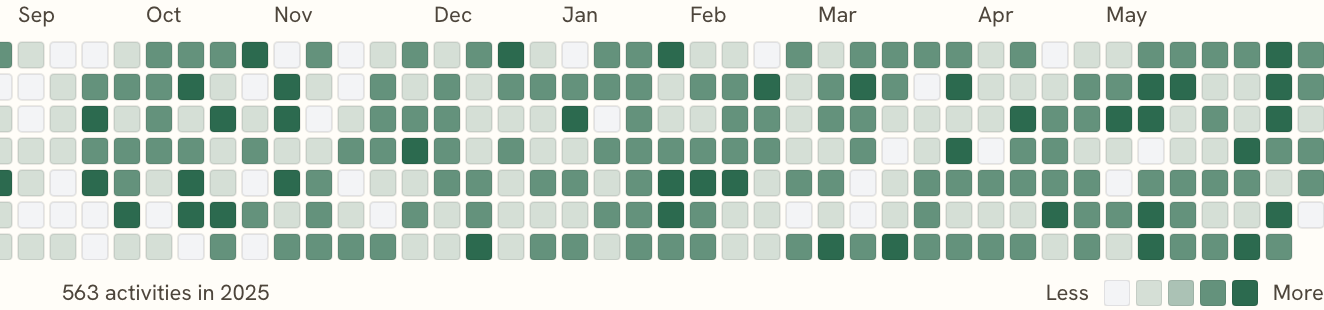
You look back over a few months and see the texture of it: bright stretches, faded stretches, gaps, and a whole lot of pale squares that only exist because you did the bad-but-real version instead of waiting. That texture is what actually builds something.
You will almost never do the thing under perfect conditions, because the conditions are rarely perfect and you rarely feel like it. So set the bar at something you can clear today, and clear it. A pale square still counts, and they add up faster than you'd think.